Ancestral Rhythm: Why Slowing Down Is Old Wisdom, Not a Trend
Ancestral Rhythm: Why Slowing Down Is Old Wisdom, Not a Trend

There was a time when the day did not begin with a notification.
Our ancestors woke with the light, worked with the season, rested when darkness came, and gathered with others when life became difficult. Their attention was not pulled in a hundred directions at once. Their healing was not expected to happen alone. The village shared food, stories, responsibility, grief, and joy.
Today, slowing down is often presented as a new wellness trend. We see quiet mornings, digital detoxes, herbal teas, and rest rituals promoted as modern solutions to modern stress.
But the wisdom is much older than the trend.
Living with more rhythm, intention, and connection is part of our ancestral inheritance. It is a gentle return to remembering that the mind, body, and spirit are not machines. They need light, darkness, movement, stillness, nourishment, and community.
Our bodies still remember the rhythm of light and season
Long before electric lights and glowing screens, the sun helped shape the day. Morning light signaled the beginning of activity. Evening darkness invited the body toward rest. The changing seasons brought different kinds of work, food, movement, and ceremony.
Our internal body clocks are still influenced by these natural patterns. Daylight helps regulate our sleep-wake cycle, while darkness supports the body’s transition into rest. When we stay connected to natural light during the day and reduce bright light at night, we give our bodies signals they recognize.
Modern life can make this difficult. Many of us work indoors, stay awake long after sunset, eat at irregular times, and carry our phones from the bedroom to the kitchen to the dinner table.
This does not mean technology is bad. It means our tools need boundaries.
Ancestral rhythm is not about pretending we live in another century. It is about asking a simple question:
What does my mind, body, and spirit need in this moment?
Sacred attention is a form of protection
Attention is one of the most valuable resources we have.
Where attention goes, energy often follows. What we repeatedly watch, read, hear, and think about can shape our mood, habits, beliefs, and sense of self.
Our ancestors understood the importance of focus, even if they did not use the phrase “digital wellbeing.” Preparing food, tending plants, making tools, caring for children, listening to elders, and participating in ceremony all required presence. These were not activities to rush through while being interrupted by alerts.
Today, a notification can break our concentration in seconds. A quick check can become an hour of scrolling. A quiet moment can feel uncomfortable because we are so used to filling every space.
Sacred attention means treating your focus as something worthy of protection. It means deciding what receives your energy instead of allowing every ping, message, and headline to claim it.
You might begin with small boundaries:
- Turn off nonessential notifications.
- Keep your phone away during meals.
- Create a screen-free hour before sleep.
- Take a walk without listening to anything.
- Give one task your full attention before moving to the next.
- Let some messages wait until you have the capacity to respond.
These practices are not a rejection of technology. They are an act of self-respect.
Small rituals can guide us back
Healing does not always begin with a dramatic life change. Often, it begins with one small ritual repeated with care.
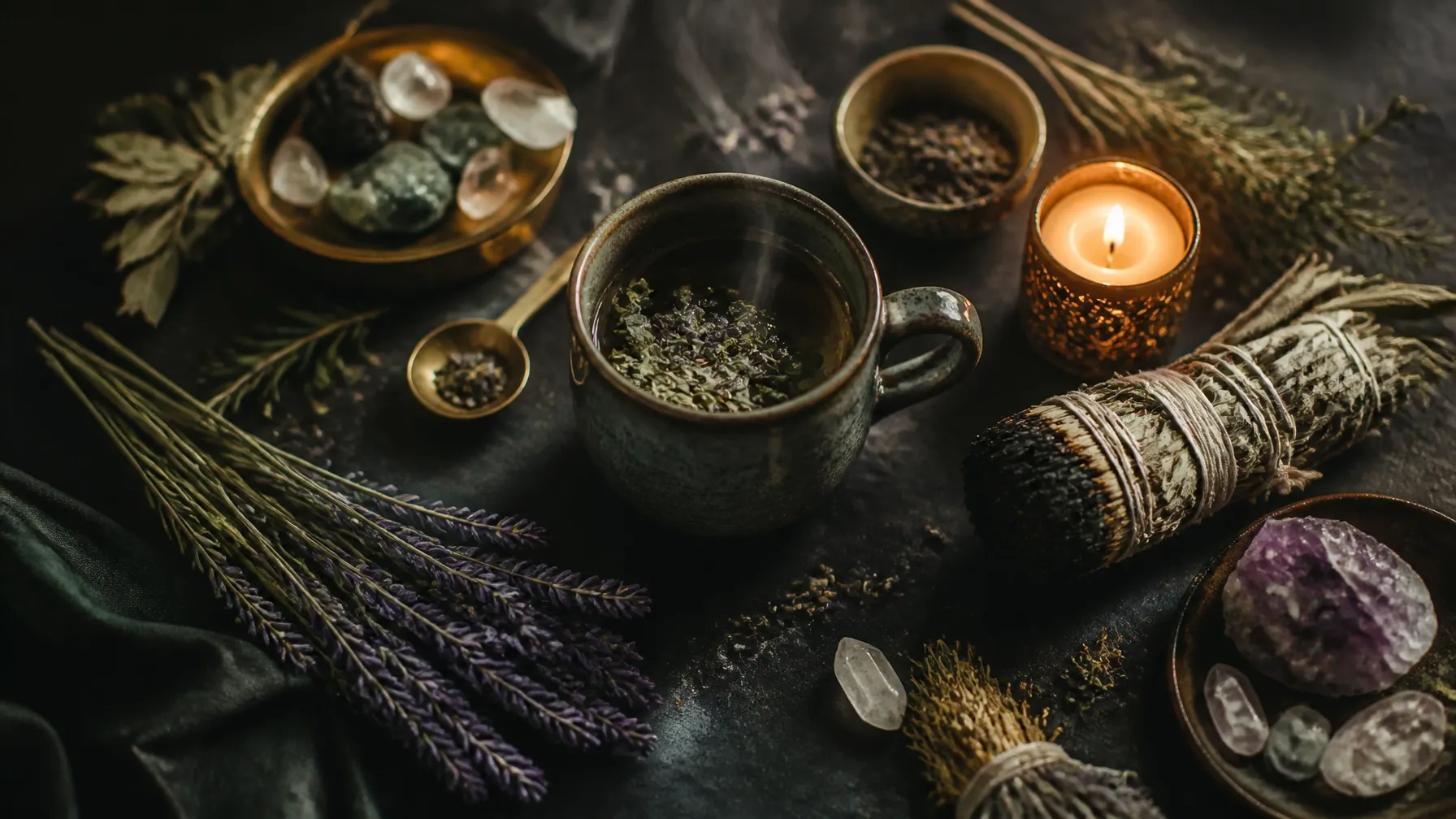
A warm cup of tea in the morning can become a moment to breathe before the day begins. Opening a window can remind you that you are part of the natural world. Lighting a candle before journaling can help signal that it is time to turn inward. Washing your hands slowly can become a transition between work and rest.
Our ancestors used ordinary acts to create meaning. Cooking, gathering herbs, sweeping, bathing, singing, praying, and sharing meals could all become forms of connection.
You do not need a perfect routine. You need a practice that feels possible.

Try creating a simple evening ritual:
- Put your phone on silent or leave it in another room.
- Lower the lights.
- Prepare a cup of herbal tea or water.
- Take five slow breaths.
- Ask yourself, “What can I release from today?”
- Name one thing you are grateful to carry into tomorrow.
The purpose is not to perform wellness correctly. The purpose is to create a doorway into presence.
Healing is not a performance
Modern wellness can sometimes turn healing into another scoreboard.
We may feel pressure to meditate every day, eat perfectly, wake up early, stay positive, and become a completely new person. When we miss a day, we may believe we have failed.
But healing is not a competition. It is not a social media post. It is not a polished morning routine that proves you have everything together.
Ancestral healing reminds us that life moves in cycles. There are times for planting and times for harvest. Times for gathering and times for retreat. Times when we carry others and times when we need to be carried.
Your progress may not always be visible. You may be healing by resting instead of reacting. By asking for help. By choosing not to return to an old pattern. By listening to your body before it has to shout.
Release the scoreboard. Your healing does not need to be impressive to be real.
Rest is wisdom, not laziness
Many people have been taught to see rest as something they must earn. We work until we are exhausted, then feel guilty for needing recovery.
But rest has always been part of the rhythm of life. The earth rests. Fields rest. The body rests. Communities create periods of celebration, mourning, worship, and stillness because people cannot give endlessly without being replenished.
Rest is not the opposite of healing. It is one of the places where healing can happen.
Rest may look like sleep, but it can also mean:
- Sitting outside without an agenda
- Taking a slower route home
- Saying no to another obligation
- Eating without multitasking
- Letting your mind be quiet
- Spending time with people who do not require you to perform
If you are always rushing, your body may begin to treat life as an emergency. Rest gives your nervous system a different message: you are allowed to be here.
JOMO: the joy of missing out
We often hear about the fear of missing out, or FOMO. But there is another possibility: the joy of missing out.
JOMO is the relief of not attending every event, answering every message, following every trend, or knowing every update. It is the quiet wealth of having time that belongs to you.
Our ancestors were connected to their communities, but connection did not mean constant access. There were natural pauses between conversations. People had time to sit with their thoughts. Not every moment had to be documented or shared.
Choosing to miss out can create room for what matters more:
- A meal with family
- A conversation with an elder
- A walk under the changing sky
- Time with your children
- Prayer, reflection, or meditation
- Creative work
- Deep sleep
JOMO is not isolation. It is choosing meaningful connection over constant noise.
A gentle ancestral rhythm to try this week
You do not need to overhaul your entire life. Begin with one day, one evening, or one hour.
Try this simple rhythm:
Morning: Seek natural light before reaching for your phone. Take a few breaths and set an intention for the day.
Midday: Step outside if you can. Eat one meal without a screen. Notice how your body feels.
Evening: Turn down the lights and create a small ritual with tea, music, prayer, journaling, or quiet.
Weekly: Set aside a period of time when you are not available to the feed. Use it to rest, prepare nourishing food, visit someone, or simply be.
Let this be flexible. The goal is not control. The goal is relationship, with your body, your spirit, your loved ones, the land, and your own attention.
Return to the wisdom that already knows
At Mystique Roots, we believe healing can be spiritual, physical, and mental. We draw from ancestral teachings and natural healing tools to support rituals that bring people back to themselves.
That may include herbs, rest, reflection, energy healing practices, time in nature, or the support of a trusted community. No single practice is right for everyone. The village teaches us that healing is stronger when we do not carry everything alone.
For more grounding rituals, explore the Mystique Roots offerings, learn about our story, or read more reflections in The Journal.
If you want a more structured way to create digital boundaries, Gloria Grant’s first book, Dopamine Reset: Reclaim Your Focus and Motivation in a Distracted World, offers a practical 30-day reset. Published by Wellness Book Studio and available on Amazon Kindle since September 7, 2026, the book is not about throwing away your phone. It is about deciding when technology receives your attention instead of letting technology decide for you.
Explore Dopamine Reset on Amazon Kindle

Slowing down is not falling behind.
It is remembering your rhythm.
It is protecting your sacred attention, allowing rest, choosing small rituals, and letting healing unfold without a scoreboard. It is returning to the wisdom of the village: we are connected to the earth, connected to one another, and never meant to move through life completely alone.
These practices may support your personal wellness routine, but they are not a substitute for medical or mental health care. If you are experiencing physical or emotional concerns, please speak with a qualified healthcare professional.